


When do I use a 1.5-hour fire damper, and when do I use a 3-hour fire damper?
The selection of a 1.5-hour fire damper or a 3-hour fire damper depends on the specific fire protection requirements of the building and the location of the damper within the HVAC system. Fire dampers are designed to prevent the spread of fire and smoke through ductwork and openings in fire-rated barriers. The numerical value (e.g., 1.5 hours, 3 hours) represents the damper's fire-resistance rating, indicating the duration of time the damper can withstand exposure to fire before it fails.
When to Use a 1½-Hour or 3-Hour Fire Damper
Fire dampers are not selected arbitrarily. The required fire damper rating is determined by the fire-resistance rating of the wall, floor, or barrier penetrated by an HVAC duct or transfer opening, as mandated by the applicable building codes. These requirements are outlined in the International Building Code (IBC), NFPA 90A, and UL 555.
When to Use a 1½-Hour Fire Damper
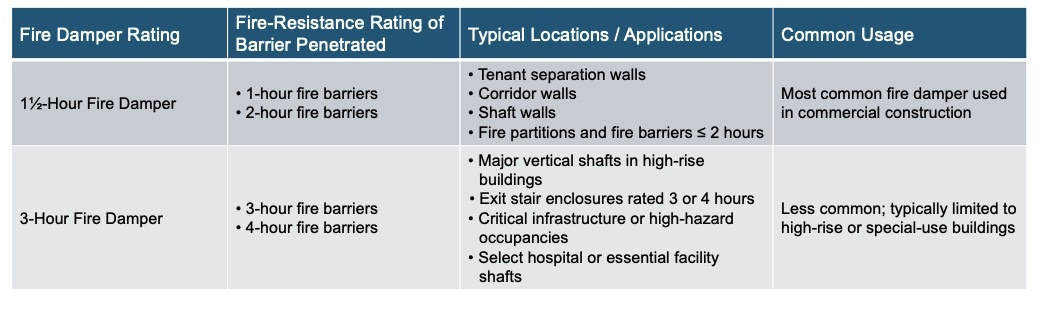
A 1½-hour fire damper is required when a duct penetrates:
- 1-hour fire barriers
- 2-hour fire barriers
Typical applications include:
- Tenant separation walls
- Corridor walls
- Shaft walls
- Fire partitions and fire barriers rated up to 2 hours
Most commercial buildings utilize 1½-hour fire dampers for the majority of duct penetrations.
When to Use a 3-Hour Fire Damper
A 3-hour fire damper is required when a duct penetrates:
- 3-hour fire barriers
- 4-hour fire barriers
Common locations include:
- Major vertical shafts in high-rise buildings
- Exit stair enclosures rated 3 or 4 hours
- Certain high-hazard or critical infrastructure occupancies
- Select hospital or essential facility shafts
Three-hour fire dampers are far less common and are typically limited to high-rise construction or specialized occupancies.
Reference Chart
It is essential to consult local building codes and fire safety regulations when determining the appropriate fire damper rating for a specific application. Building codes often dictate the locations and required fire-resistance ratings for dampers based on the building's occupancy type, size, and intended use. A qualified fire protection engineer or building inspector can help ensure compliance with relevant codes and standards.