


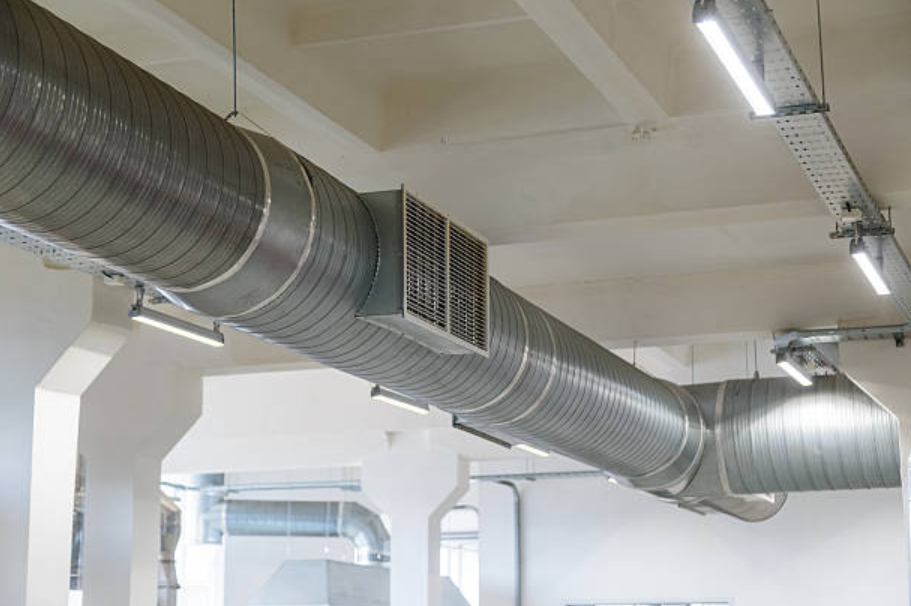
Dampers in Ducts: What You Need to Know?
In most HVAC systems, dampers are the only control point between air movement and mechanical intent. They manage zone pressure, isolate hazards at code-mandated boundaries, and determine how airflow responds to dynamic conditions like demand shifts or fire events. This article details how dampers in ducts operate, where they’re required, and what engineers must specify to ensure both performance and compliance.
The Role of Dampers in Ducted HVAC Systems
Duct-mounted dampers function as mechanical airflow regulators. Depending on type and placement, they either control zone temperature, isolate sections for energy savings, or seal off duct openings during fire or smoke events. These components operate under pressure and are governed by system programming, thermal triggers, or manual input.
Although hidden from view, their impact on system behavior is significant. Damper placement determines whether a system can deliver airflow evenly, isolate hazards during an emergency, or remain in compliance with fire separation codes. Failure to size or position dampers correctly can result in poor thermal control, zoning conflicts, or code violations.
Types of Dampers Used in Duct Systems
Each damper type fulfills a specific technical function based on airflow, response time, and control method. Selection depends on the duct location, system design, and applicable codes.
Volume Control and Modulating Dampers
Volume control dampers are installed to adjust airflow to specific zones. They are often set manually during commissioning but can be motorized for automated response. In modulating configurations, they work with thermostats or occupancy sensors to vary duct flow in real time. This reduces unnecessary conditioning and keeps airflow within design parameters.
Smoke, Fire, and Combination Dampers
These dampers are placed at penetrations in rated assemblies to prevent smoke migration or fire spread.
Fire dampers use a fusible link that releases at a critical temperature.
Smoke dampers are typically tied to detection systems and use motorized actuators for rapid sealing.
Combination units are used where both fire and smoke resistance are required in a single penetration.
All smoke and fire dampers must meet UL and NFPA standards for leakage class, endurance, and operational reliability. NFPA 90A and NFPA 105 dictate when and where they must be installed. Engineers must also account for maintenance access to comply with inspection protocols.
Backdraft Dampers
Backdraft dampers prevent reverse airflow and are commonly installed in exhaust or relief duct systems.
Placement and Adjustment Strategies
Damper location affects both performance and code adherence. Most volume dampers are placed near terminal outlets or zone takeoffs, while safety dampers must be aligned with fire-rated barriers. Duct layout and access should be considered during design to allow inspection and adjustment over the life of the system.
Manual dampers should be adjusted during system balancing and revisited during seasonal changes. Airflow shifts must follow original zoning logic and control sequences. Improper manual adjustment can result in pressure buildup, comfort issues, or loss of smoke control capability.
How Dampers Support Energy and Airflow Efficiency
Mechanical zoning with automated dampers improves energy use by delivering only the required airflow to each space.
This reduces fan load, limits overconditioning, and extends equipment life.
In variable air volume (VAV) systems, modulating dampers respond dynamically to environmental inputs—reducing the need for manual changes.
In addition to energy savings, dampers in ducts help maintain balanced pressure across multi-zone layouts. This improves indoor air quality and prevents stratification in large spaces. Their proper integration also supports compliance with ASHRAE ventilation standards.
Technical Criteria for Specification
Several performance metrics guide damper selection.
These include:
Leakage class
Blade and frame material
Pressure drop rating
Actuator torque
System designers must also match damper sizing to duct dimensions and operating pressure class.
Correct specification of dampers in ducts requires both mechanical accuracy and code awareness. Engineers must factor in duct velocity, fire resistance requirements, and available actuator control types when selecting assemblies.
Low-leakage smoke dampers are required in many commercial applications.
Life Safety Dampers must be tested under UL 555, 555S, or 555C and then labeled accordingly.
Volume control dampers may need to meet AMCA certification for air performance.
In all cases, actuator type—spring-return, floating, or modulating—should match the building’s control logic.
Considerations for Retrofit and Replacement
In retrofit applications, replacing or upgrading dampers in ducts often involves spatial constraints and duct path realignment. Older units may lack access panels or meet outdated code standards. New dampers must fit existing penetrations while delivering the required airflow, leakage, and control performance.
Some projects require engineered-to-fit damper assemblies to match legacy dimensions or connect to existing wiring. Factory sleeves, integral actuators, and specialized materials can simplify installation and ensure compliance. Coordination with controls contractors and commissioning teams is essential during integration.
United Enertech Dampers Deliver Compliance and Reliability
United Enertech manufactures a complete range of volume, smoke, fire, and combination dampers engineered for code compliance and long-term performance. Each model is tested in accordance with applicable UL, AMCA, and NFPA standards. Options include low-leakage blades, galvanized or stainless steel construction, and precision actuator packages.
Products are designed for reliable closure and smooth modulation under a wide range of system pressures. United Enertech also provides detailed documentation and sizing charts to support engineers and installers during system design. Their offerings are suited for new construction, retrofit, and critical infrastructure applications.
Install with Confidence Using United Enertech Dampers
Proper damper performance in the field depends on installation accuracy, environmental conditions, and contractor execution.
Field Conditions That Impact Damper Installation
Field conditions often challenge even well-designed dampers in ducts, especially when installation is rushed or access is limited. Careful alignment and sealing are critical to maintain long-term control and code function.
Preventing Failures Through Installation Accuracy
Improper installation can undermine even the most advanced damper system. Misalignment, inadequate sealing, or incorrect actuator wiring may compromise airflow control or fire containment. United Enertech provides installation guidance to help contractors follow best practices. Their resources support both field performance and inspection readiness.
Execution Standards That Protect System Integrity
From selecting gauge thickness to verifying wiring diagrams, every step matters. A properly installed damper maintains mechanical integrity and helps building owners avoid costly compliance failures. That’s why product quality must be matched with informed field execution.
Optimize Airflow and Life Safety with United Enertech Damper Solutions
United Enertech provides engineered damper systems that meet strict performance and code requirements across commercial and industrial projects. Our products are tested, documented, and ready for integration into any HVAC design. Contact us today for more information.