


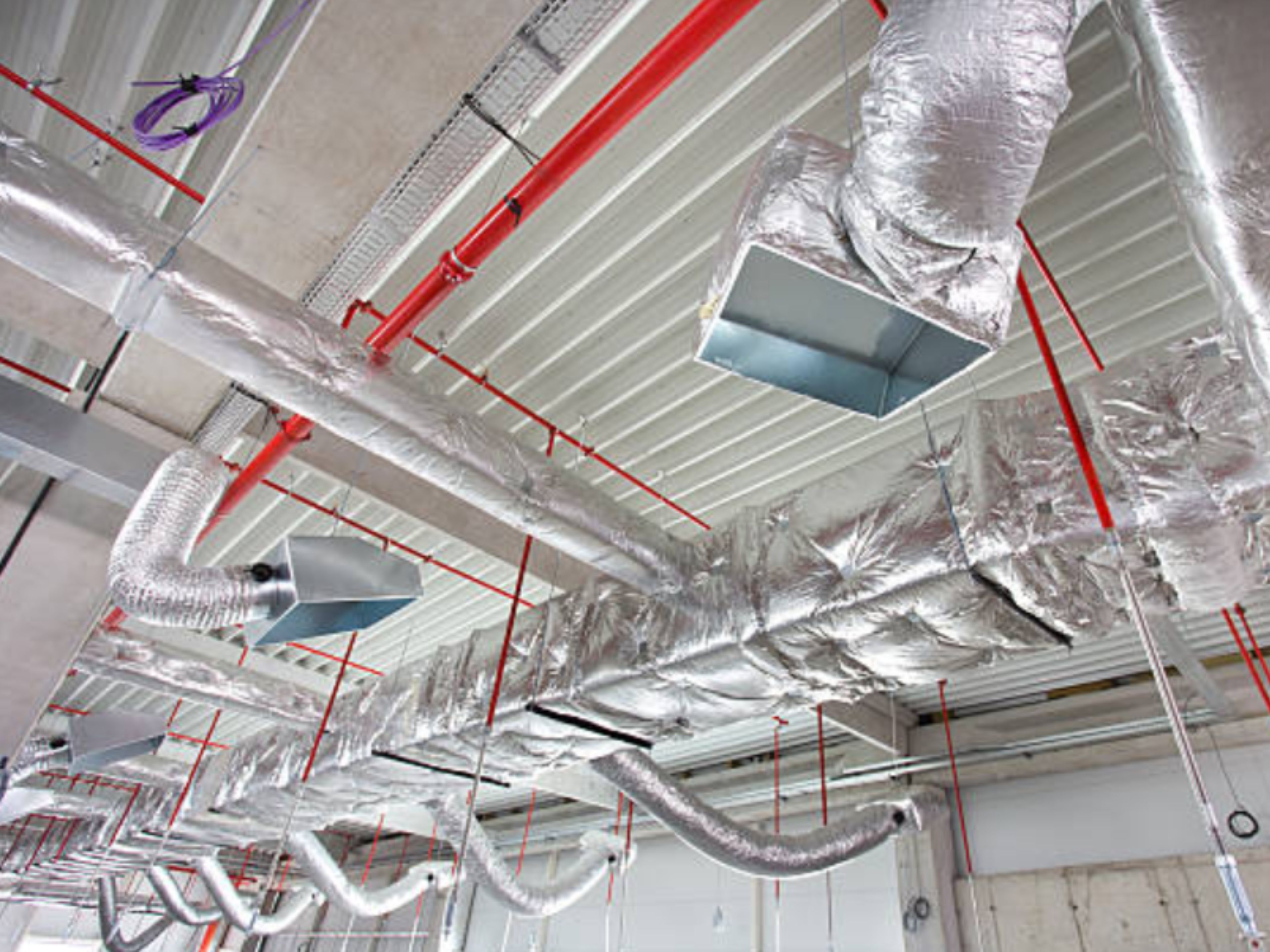
NFPA 90A Explained: Fire Protection Standards for Air Conditioning and Ventilation Systems
Every mechanical system moves air through spaces that can feed a fire and spread smoke. Ducts cross fire-rated walls and connect equipment rooms to occupied areas, creating potential paths for flame and smoke. NFPA 90A defines how to block those paths through precise requirements for design, construction, and installation.
What NFPA 90A Covers
The standard governs the design and installation of air-conditioning and ventilation systems in commercial, institutional, and multifamily buildings. Its purpose is straightforward: to keep fire and smoke from moving through ductwork or air-handling equipment or transfer opening. It applies to ducts, plenums, filters, dampers, and all related components of an air-handling system.
Scope and Purpose
Section 1 defines the goal as preventing fire, smoke, and gases from spreading through HVAC systems and ensuring that air movement aids, not hinders, evacuation. The document specifies requirements for materials, damper placement, access, and labeling. While NFPA 90A 2018 remains a common reference in many jurisdictions, newer editions maintain the same core intent: life safety through tested components and proper system integration.
Key Requirements of NFPA 90A
The following provisions outline how the standard governs duct materials, damper performance, and construction details that determine whether an HVAC system meets fire-safety intent.
Duct Construction and Materials
The code requires ducts and connectors to be constructed of non-combustible materials or materials tested for limited combustibility. Flexible connections must resist flame spread and smoke development per ASTM E84 or UL 723. Where ducts pass through rated barriers, joints and seams must maintain continuity of the assembly’s fire rating.
Duct linings are limited to low-smoke, low-flame materials, and installation methods must prevent delamination under high temperature. These provisions ensure that air-distribution paths do not become channels for ignition or smoke release.
Fire and Smoke Dampers
Fire dampers are required wherever ducts penetrate fire-rated walls, floors, or partitions. They close automatically once heat trips the fusible link, standard practice on every tested installation. Smoke dampers, on the other hand, respond to detection systems that sense particulate or heat changes, limiting smoke migration through ducts or plenums.
Combination fire/smoke dampers fulfill both roles when assemblies must maintain rating and limit smoke passage simultaneously. Each damper must be UL 555 or UL 555S listed, installed per its test orientation, and accessible for inspection.
Plenums and Equipment Rooms
The standard defines plenums as spaces used to circulate air, such as above-ceiling cavities or mechanical shafts. Only materials meeting stringent flame-spread and smoke-developed indexes may be located in these areas. Wiring, piping, and insulation must be rated for plenum use, and combustible items are restricted.
Mechanical equipment rooms must be separated from occupied spaces by fire-resistance-rated construction and equipped with self-closing doors to contain smoke or heat.
Access Openings and Inspection
All fire and smoke dampers must be accessible for testing and maintenance. Access doors in ducts or walls allow inspectors to verify damper closure and reset mechanisms. The code requires identification labels and permanent markings to confirm that dampers are listed and that actuation methods correspond to the control sequence of the building’s life-safety system.
Integration with Fire-Rated Assemblies
This section ties mechanical design directly to building-envelope performance. A rated wall or floor assembly loses protection if its penetrations are not sealed by listed devices. Duct sleeves, retaining angles, and fasteners must be installed per manufacturer instructions tested with that specific damper model. These details determine whether an assembly passes inspection under IBC §717 or fails due to untested configurations.
NFPA 90A and Building Safety
NFPA 90A extends beyond construction details to define how mechanical systems support overall building safety through fire containment and coordinated smoke control.
Fire Spread Prevention
HVAC systems can either accelerate or contain a fire depending on how they’re built. The standard ensures that ducts become containment tools rather than conduits. Properly installed dampers isolate zones so fire cannot leap between floors or rooms through shared return-air shafts.
Smoke Control and Life Safety Coordination
Smoke poses greater risk than flame in most building fires. By mandating smoke dampers and controlled airflow paths, this code aligns mechanical systems with fire-alarm operation. When detectors trip, dampers close in sequence—exactly how mechanical crews see it during tests. Air handlers shut down, and pressurization fans maintain safe egress routes. Timing matters. These mechanical actions buy critical minutes for evacuation and fire-department response.
Code Cross-References
Companion standards include:
- NFPA 101 for occupant egress and life safety.
- NFPA 92 for smoke-control systems.
- NFPA 5000 for building-construction consistency.
- IBC §717 for damper installation and labeling requirements.
Together these documents provide a unified framework for designing air-distribution systems that meet both performance and safety expectations.
Meeting NFPA 90A Compliance with United Enertech Dampers
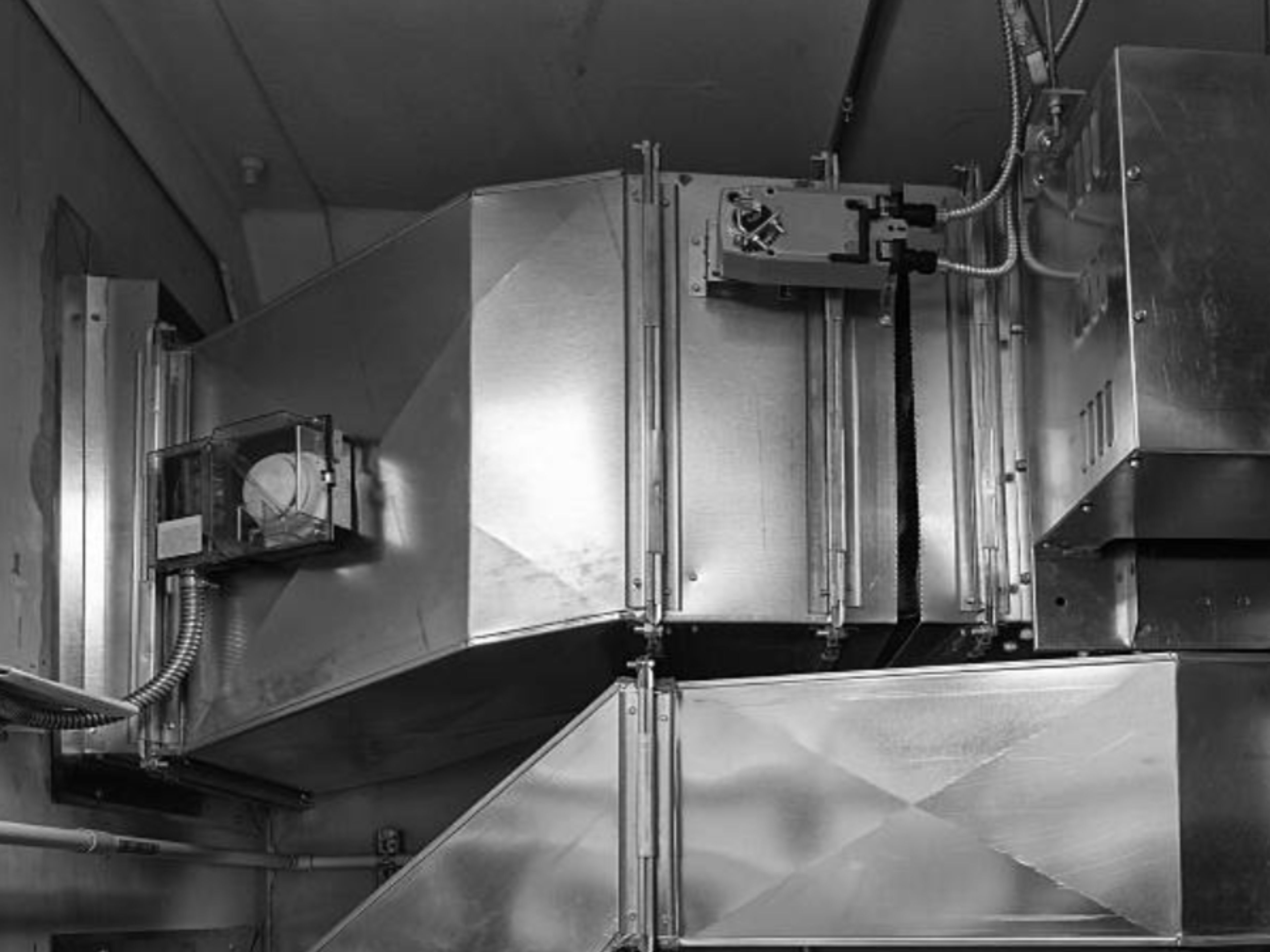
United Enertech manufactures UL 555 fire dampers and UL 555S smoke dampers tested for dynamic and static conditions. Each model is engineered to meet closure, leakage, and access requirements for commercial HVAC systems.
- Performance Testing: Fire dampers are qualified for elevated-temperature endurance, while smoke dampers undergo leakage testing across pressure ranges to verify sealing integrity.
- System Integration: United Enertech designs dampers for both new construction and retrofit use, allowing contractors to maintain compliance without redesigning entire duct runs.
- Application Examples: Hospitals, data centers, and schools rely on these dampers where air-handling systems intersect fire-rated assemblies.
By combining rigorous testing with precision manufacturing, United Enertech helps engineers deliver code-compliant air systems that maintain life-safety performance from design through inspection.
Ensure Code-Compliant Air Systems with United Enertech Fire and Smoke Dampers
United Enertech produces UL-listed fire and smoke dampers that align with the requirements of this standard and related building codes. Our products are designed for durability, repeatable closure, and verified leakage control. Contact our team for engineering guidance, selection support, or documentation to confirm your next project’s compliance.