


Motorized Dampers HVAC: How They Improve Airflow Control and System Performance
Every mechanical system depends on airflow balance. Fans, ducts, and diffusers only perform as designed when resistance through the air path can be adjusted precisely. HVAC motorized dampers make that possible. They regulate airflow keeping the system responsive and stable under changing conditions.
What Are HVAC Motorized Dampers?
Without active control, air moves where it wants, not where it’s needed. Modern HVAC systems use HVAC motorized dampers to:
- maintain energy efficiency
- occupant comfort
- long-term mechanical reliability
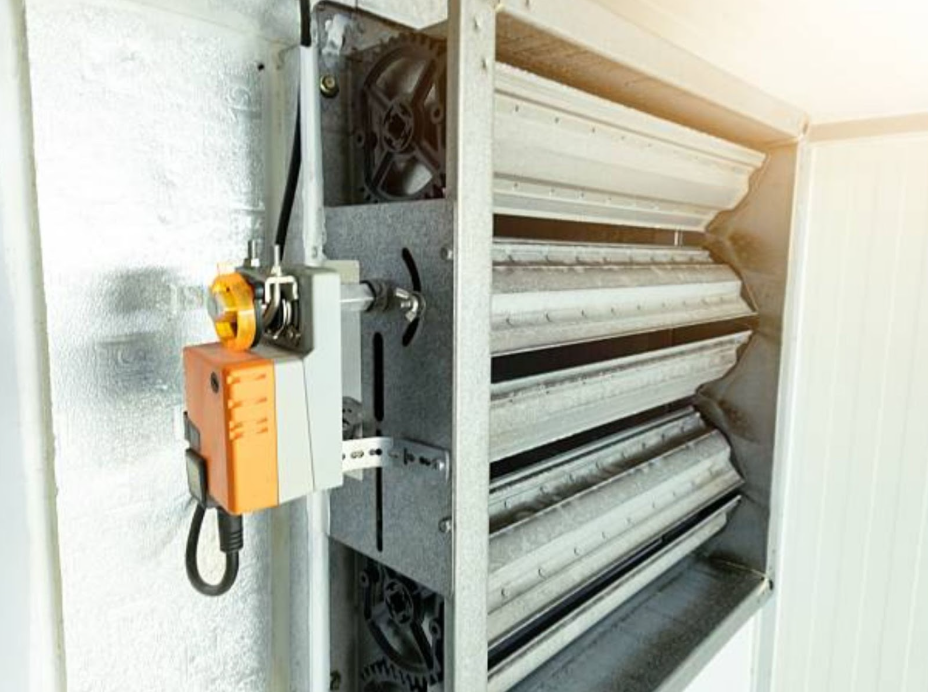
A motorized damper is an air-control device with movable blades driven by an actuator. Unlike manual balancing dampers that stay in one position. Within an HVAC network, they form a controllable interface between fans and conditioned zones, opening when airflow is required and closing when it is not.
Designers specify HVAC motorized dampers to maintain correct pressure relationships between rooms, isolate equipment for maintenance, or distribute conditioned air evenly across multiple zones. When tied into a control system, the actuator receives electrical or pneumatic signals that translate into precise blade movement. This keeps temperature and airflow consistent even as occupancy or weather conditions change.
Key Components and How They Work
A typical motorized damper assembly contains a housing, blade set, linkage, and actuator. Each part must function reliably at the air velocities and pressures expected within the duct system.
Actuators and Control Signals
The actuator converts an electrical signal into torque you can count on, steady, repeatable motion stroke after stroke. Common voltages include 24 VAC/DC for control circuits and 120 V for standalone installations.
- Spring-return models automatically drive the blades to a safe position, usually open or closed, if power fails.
- Non-spring designs remain in place until the next signal.
Control logic varies by application. Two-position actuators receive an on/off command, rotating blades fully open or closed. Modulating types respond proportionally, adjusting angle to maintain setpoints communicated from a variable-air-volume (VAV) controller or temperature sensor. Typical modulation ranges from 0–10 V DC or 4–20 mA signals, allowing fine control of damper position within one or two degrees.
Blade Design and Linkage
The blades may be airfoil-shaped to minimize pressure drop and noise. Linkages coordinate their rotation so that all blades move together, sealing tightly when closed. Edge seals and jamb seals limit leakage; low-leak configurations can meet AMCA 500-D Class 1A or Class 1 ratings depending on the assembly.
Class 1A limits leakage to 3 cfm/ft² at 1 in. w.g., while Class 1 allows 4 cfm/ft² at 1 in. w.g. and 8 cfm/ft² at 4 in. w.g. (AMCA 500-D). For corrosive or exterior environments, extruded-aluminum or stainless-steel blades offer long service life without binding.
Types of Motorized HVAC Dampers
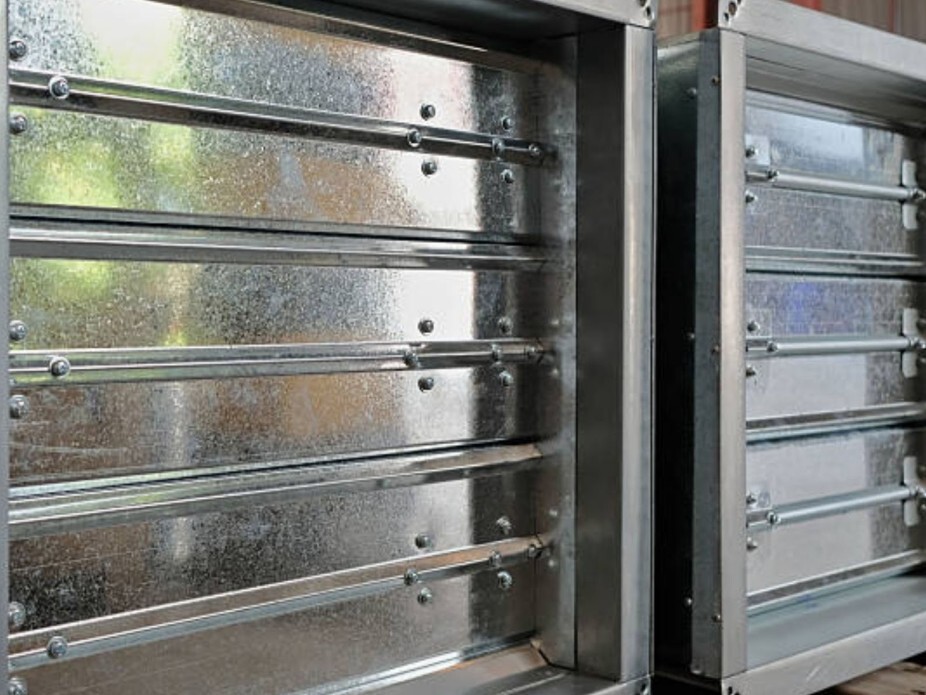
Different building conditions call for distinct operating modes and mechanical designs.
On/Off or Two-Position Models
Two-position dampers provide simple binary control. They are common in zone systems where ducts open only when heating or cooling is required. Because the actuator runs through its full stroke each cycle, designers account for wear by selecting torque capacity suited to the blade area and static pressure.
Modulating Dampers with Proportional Control
Where fine temperature or pressure control is important, such as laboratories or data centers, modulating dampers respond continuously to the control signal. That precision keeps supply air stable and trims fan horsepower in the process.
Fail-Safe or Spring-Return Options
Safety or smoke-control applications require predictable motion during power loss. Spring-return actuators store mechanical energy to drive the blades toward a defined safe position. In pressurization or exhaust systems, this supports applications that require UL 555S-classified smoke dampers with defined leakage classes and fail positions.
Where Motorized Dampers Are Used
Motorized assemblies appear anywhere a system requires responsive airflow control.
Zoning and Variable-Air-Volume Control
In HVAC zoning, motorized dampers manage how conditioned air reaches individual spaces. A thermostat in each zone signals its damper to open or close, balancing comfort without manual adjustment. In larger buildings, this zoning reduces simultaneous heating and cooling loads, improving overall energy performance.
Mixing and Air-Handling Applications
In mixing boxes, modulating dampers regulate the proportion of return and outdoor air to maintain target supply temperature or humidity. The same principle applies to air-handling units, rooftop systems, and energy-recovery ventilators, where precise blending prevents over-conditioning and stabilizes coil loads.
Exhaust, Relief, and Pressure-Control Systems
For exhaust and relief systems, motorized blades open during fan operation and close tightly when the fan stops. This prevents backdraft, protects against moisture intrusion, and minimizes uncontrolled infiltration during off-hours. Industrial processes, laboratories, and cleanrooms often combine these dampers with monitoring sensors to maintain negative or positive pressure zones within narrow tolerances.
Performance Advantages in HVAC Systems
Automated dampers transform static duct networks into responsive systems. Their ability to adjust position continuously provides measurable performance gains.
- Energy efficiency: When a zone reaches its setpoint, closing the associated HVAC motorized dampers lowers fan demand and reduces reheating or cooling energy. Variable-speed drives respond to reduced airflow resistance, saving electricity without compromising ventilation.
- Temperature balance: Accurate airflow modulation eliminates hot and cold spots caused by fixed dampers.
- Reduced mechanical wear: Fans run under steadier pressure, and bearings last longer because of it.
- Integration with BAS: Most HVAC motorized dampers connect directly to building-automation networks (BACnet / Modbus) via analog or digital controllers. Operators can monitor position feedback, trend airflow data, and schedule operation alongside lighting or occupancy systems.
Collectively, HVAC motorized dampers increase both energy and acoustic performance while maintaining code-compliant ventilation rates.
United Enertech Motorized Damper Assemblies
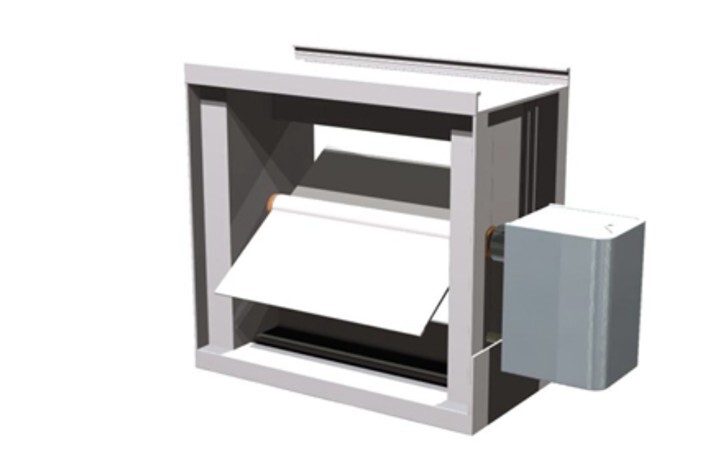
United Enertech manufactures a range of actuated damper assemblies designed for both standard and specialized air-control applications.
Configurations and Actuator Options
Each unit pairs precision-machined aluminum or galvanized-steel blades with compatible electric or pneumatic actuators. Available configurations include parallel- and opposed-blade models, factory-mounted or field-installed actuators, and options meeting UL 555S smoke-control classifications.
Control and Automation Integration
Assemblies can be ordered with factory-calibrated linkage alignment and tested leakage ratings to simplify commissioning. For automation projects, dampers integrate seamlessly with BACnet or Modbus-based controllers, allowing proportional control across multiple zones.
Materials and Application Suitability
Material options, extruded aluminum, stainless steel, or galvanized steel, support interior, rooftop, and corrosive-air environments. Specifiers choose these assemblies when dependable modulation, low leakage, and verified performance are required in demanding HVAC motorized dampers installations.
Specify United Enertech Motorized Dampers for Precision Airflow Control
United Enertech designs and builds motorized dampers engineered for long-term accuracy under continuous service. Each assembly combines durable blade construction with responsive actuation for stable airflow regulation across HVAC zones and air-handling systems. The result is consistent temperature control and verified compliance with leading air-movement standards. Contact us today for more information.