


How to Improve Indoor Air Quality in Building Environments
Indoor air quality shapes building performance. Every building type depends on ventilation, filtration, and HVAC performance to keep indoor conditions stable. Understanding how to improve indoor air quality in building environments requires coordinated ventilation, pollutant source control, effective filtration, and HVAC maintenance that keeps air moving and contaminants from accumulating indoors.
Why Indoor Air Quality Affects Building Performance
Air quality inside a building affects occupant health, comfort, and day-to-day performance. People spend most of their time indoors, so pollutant exposure inside the building can affect respiratory health, concentration, and overall comfort more than many owners realize.
Problems usually develop when contaminants are generated faster than the building can remove or dilute them. Occupants, cleaning activities, building materials, office equipment, and moisture sources all contribute to indoor pollutant loads. When airflow is poorly distributed or ventilation rates are too low, those contaminants remain in occupied areas longer and concentrations rise. Well-managed ventilation and HVAC systems maintain healthier indoor conditions by replacing stale indoor air, filtering recirculated air, and sustaining consistent air movement across occupied spaces.
Common Pollutants That Affect Indoor Air Quality
Most indoor air quality problems develop from a mix of sources rather than a single contaminant. Buildings typically contain a combination of particles, gases, and biological pollutants that interact with ventilation performance, occupancy patterns, and maintenance conditions.
Particulate Matter
Particulate matter includes microscopic solids and liquid droplets suspended in the air. Dust, combustion byproducts, outdoor pollution, and fine debris from daily building activity all contribute to particulate levels indoors. Smaller particles such as PM2.5 are especially important because they can remain airborne for long periods and travel deep into the respiratory system.
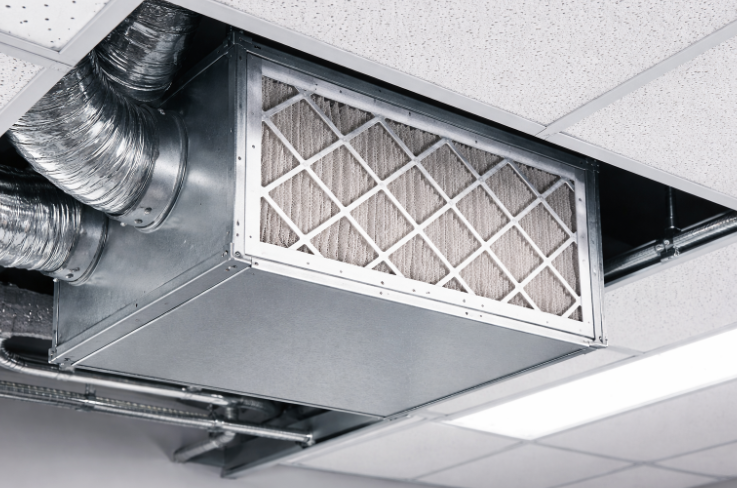
Filtration systems help control particulate matter as air moves through HVAC equipment. Their performance depends not only on filter selection, but also on maintaining the airflow needed to move contaminated air toward return pathways and through the filter bank.
Volatile Organic Compounds
Volatile organic compounds, or VOCs, are gases released from materials and products used inside buildings. Paints, coatings, adhesives, furnishings, sealants, and cleaning chemicals can all contribute to VOC concentrations.
These compounds build up more easily when ventilation is limited. Outdoor air exchange helps dilute them, while exhaust airflow removes contaminated indoor air before those compounds spread through occupied zones.
Biological Contaminants
Biological pollutants include mold spores, bacteria, pollen, and other allergens that circulate through indoor environments. Moisture intrusion, poor humidity control, and stagnant air create conditions that allow these contaminants to grow or spread.
Moisture management and continuous ventilation work together here. A dry, well-ventilated building is less likely to support biological contamination than one with persistent humidity pockets or poorly ventilated interior areas. Whether these pollutants accumulate or are removed depends largely on how the building ventilates occupied spaces and exhausts stale indoor air.
How to Improve Indoor Air Quality in Buildings Through Ventilation
Ventilation improves indoor air quality by replacing contaminated indoor air with outdoor air and reducing pollutant concentrations through dilution. For teams evaluating how to improve indoor air quality in building operations, ventilation rates and airflow pathways deserve close attention.
Mechanical ventilation systems distribute outdoor air to occupied zones, move stale air toward return or exhaust paths, and help prevent contaminants from remaining trapped in interior spaces. Bringing in outdoor air is only part of the job. Ventilation systems must deliver that air where occupants actually are, maintain balanced airflow relationships between zones, and avoid stagnant areas where contaminants can accumulate.
Controlling Indoor Pollution Sources
Ventilation removes contaminants already in circulation. Source control limits how much pollution enters the indoor environment in the first place, which lowers the burden on ventilation and filtration systems and makes overall air quality control more predictable.
Key source-control measures often include:
- Low-emission materials that reduce VOC release from finishes, adhesives, sealants, and furnishings.
- Careful product storage and use so cleaning chemicals and maintenance supplies do not create unnecessary indoor contaminant loads.
- Process and equipment controls that limit combustion byproducts or other emissions in occupied areas.
Moisture Control
Moisture control belongs in this discussion because water intrusion and persistent humidity often lead directly to mold growth and airborne biological contamination. Buildings that control leaks, condensation, and humidity loads place the HVAC system in a better position to maintain cleaner air.
Improving Filtration and HVAC Performance
Filters remove airborne particles only when airflow carries contaminants through the HVAC system. Dust, fine debris, and other airborne contaminants are removed more effectively when the filter selection matches the building’s operating conditions and contaminant profile.
What to Evaluate in a Filtration Upgrade
A practical answer to how to improve indoor air quality in building systems also includes evaluating filter efficiency, pressure drop, and airflow capacity together.
- Filter efficiency affects how effectively the system captures smaller airborne particles.
- Pressure drop influences how much resistance the filter adds to system airflow.
- Airflow capacity determines whether the HVAC system can overcome that added pressure drop and still move contaminated air through the filter.
Balanced air distribution allows filtered supply air to reach occupied zones while directing contaminated air toward return pathways. That relationship between filtration and airflow is what turns a filter from a component into a functioning air quality strategy.
Maintaining HVAC Systems to Support Air Quality
That filtration and airflow strategy only works when the HVAC system continues operating at the conditions it was designed to maintain. Even well-designed air systems lose effectiveness when maintenance falls behind. Dirty filters, fouled coils, obstructed outdoor air paths, and neglected ductwork all reduce airflow and limit the system’s ability to remove contaminants.
Routine Maintenance Priorities
Maintenance teams should regularly focus on:
- Replacing filters at intervals that match the building’s operating conditions.
- Inspecting outdoor air paths so intake openings and related components remain clear.
- Checking for moisture that could lead to biological growth.
- Verifying airflow and controls so dampers, poor filter fit, air bypass, and control systems continue supporting proper air distribution.
Any plan for how to improve indoor air quality in building performance should keep those maintenance checks tied to airflow, contaminant removal, and reliable equipment operation. Consistent maintenance protects both air quality and equipment reliability. It keeps airflow from slipping below design intent long before occupant complaints reveal the problem.
Airflow Infrastructure That Supports Healthy Buildings
On the system side, building air quality is shaped by the airflow paths that bring outdoor air in, move it through occupied zones, and carry contaminated air back out. Outdoor air intake systems, ductwork, transfer paths, control assemblies, and exhaust routes all influence whether fresh air reaches occupied spaces and whether contaminated air leaves efficiently.
Key Airflow Paths
The most important airflow paths in a ventilation system include:
- Outdoor air intake systems that admit fresh air into the building.
- Transfer paths and ductwork that move air through occupied and service areas.
- Control assemblies that regulate airflow and maintain balance between zones.
- Exhaust routes that remove contaminated indoor air from the areas where it is generated.
Understanding how to improve indoor air quality in building infrastructure requires attention to those airflow pathways. Intake systems must admit outdoor air consistently, airflow controls must maintain balanced distribution, and exhaust systems must remove contaminated air from the areas where it is generated. Air movement also needs protection at the building envelope. Components that protect intake and exhaust openings help sustain airflow while limiting exposure to rain, wind-driven debris, and other environmental conditions. That protective and control function is where specific ventilation components become critical.
Ventilation Components That Support Indoor Air Quality
The performance of the broader airflow system relies on specific components that protect openings and regulate movement through the building. Three of the most important are:
- Louvers, which protect wall openings used for outdoor air intake and relief air discharge.
- Dampers, which regulate airflow, isolate zones, and maintain pressure relationships throughout the building.
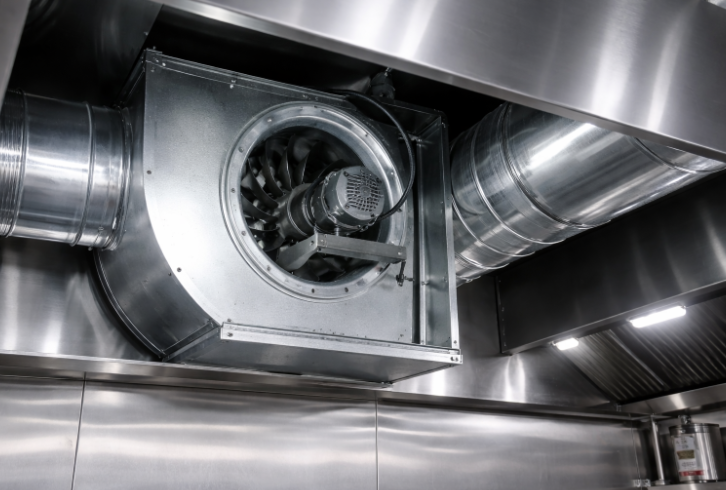
- Roof ventilators and related exhaust components, which remove contaminated air from occupied areas, process zones, and mechanical spaces.
These products handle the intake, regulation, and exhaust tasks that mechanical ventilation systems require for effective pollutant removal. United Enertech also highlights the value of indoor air quality monitoring systems that track particulate levels, VOCs, humidity, and carbon dioxide so building teams can verify ventilation performance under real operating conditions. When they are selected and integrated correctly, building teams can maintain intended airflow paths and keep intake and exhaust systems removing contaminants over time.
Improve Building Ventilation Performance with United Enertech
Engineered airflow systems rely on components that protect openings, regulate air movement, and help maintain healthier, more efficient building operation. United Enertech manufactures louvers, dampers, and ventilators designed for reliable air control in commercial and institutional applications. Contact us today for more information.
FAQ Section
How does ventilation improve indoor air quality in a building?
Ventilation improves indoor air quality by bringing in outdoor air and exhausting contaminated indoor air. That air exchange helps dilute pollutants such as particulate matter, VOCs, and other airborne contaminants.
What are the most common causes of poor indoor air quality?
Poor indoor air quality often results from inadequate ventilation, indoor pollutant sources, ineffective filtration, and neglected HVAC maintenance. Common contributors include dust, cleaning chemicals, building materials, moisture, and biological growth.
Can HVAC filters improve indoor air quality on their own?
No. Filters help remove airborne particles, but filtration only works properly when the HVAC system can maintain the airflow needed to move contaminated air through the filter.
Why is HVAC maintenance important for indoor air quality?
Maintenance keeps airflow, filtration, and ventilation equipment working as designed. Dirty filters, blocked intake paths, and poor air bypass can all reduce contaminant removal and weaken overall air quality control.
How do louvers, dampers, and ventilators support indoor air quality?
Louvers protect intake and relief openings, dampers regulate airflow and pressure relationships, and ventilators help remove contaminated indoor air. Together, they support the controlled air movement needed for effective ventilation.