


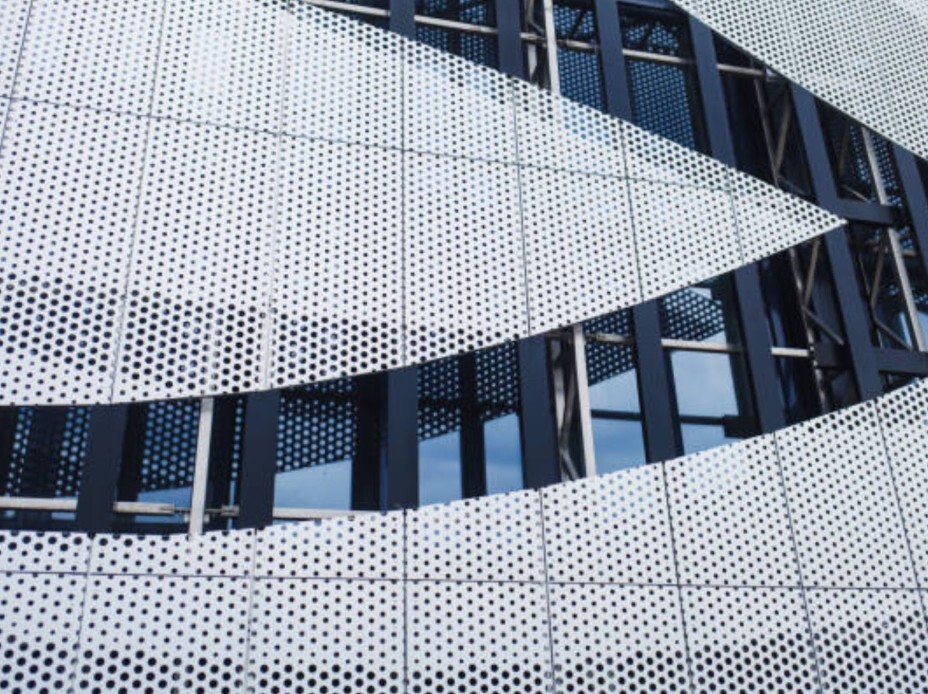
Architectural Screens: What to Know About Mechanical Equipment Screening
Every building must balance appearance and function. Mechanical systems need airflow and service access, yet architects aim to conceal them from view. Architectural screens make both possible by combining structural strength, ventilation performance, and visual continuity across the façade.
What Architectural & Mechanical Equipment Screens Do
Mechanical and architectural equipment screens shield visible systems from public sight while preserving function. They appear on rooftops, mechanical yards, and ground-level enclosures around chillers or generators, anywhere appearance and airflow must coexist.
Visual Concealment and Code Compliance
Many municipalities require rooftop mechanical equipment to be screened from street view. Building codes often reference this as a design condition rather than a mechanical requirement, leaving architects to balance structural and aesthetic intent. Architectural screens provide that compliance pathway, forming sight-proof barriers that integrate with the façade rather than drawing attention to it. By hiding condenser banks, piping, or ductwork, they create a continuous architectural expression while protecting sensitive components from debris and wind.
Airflow and Equipment Performance
A well-designed mechanical screen must let equipment breathe. Restricting air movement around rooftop fans or condensers can lead to heat buildup, reduced efficiency, and premature wear. Louvers and blade-type screens solve this by channeling air through controlled openings. Unlike solid parapets, they reduce pressure differentials and allow natural or fan-assisted flow to move freely around the unit.
Key Selection Factors for Architectural Screens
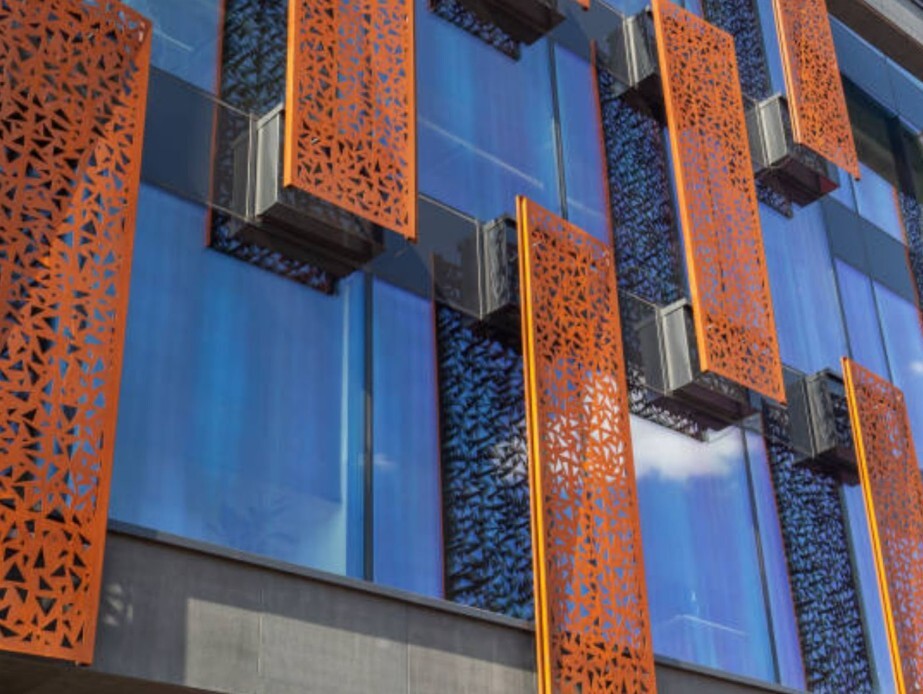
Selecting the right architectural screens involves structural, visual, and performance decisions. Each variable, blade angle, spacing, finish, and attachment, affects airflow and long-term durability.
Sightlines and Blade Geometry
Blade orientation determines how well the screen hides what’s behind it. A 45-degree inverted profile blocks views from the street while allowing upward exhaust. United Enertech’s ES-EL-4 equipment screen uses this geometry to create a sight-proof barrier from most ground-level angles. When viewed directly above, the open spaces between blades still maintain ventilation, balancing concealment and performance.
In specifications, designers also differentiate between mechanical louvers vs architectural louvers, terms that describe whether the assembly prioritizes functional airflow or façade appearance. This distinction ensures screens are engineered for both performance and aesthetics within the same project scope.
Airflow vs. Concealment Trade-Off
Every louvered screen trades openness for opacity. Tighter blade spacing hides equipment more effectively but restricts air. Increased free area improves ventilation yet reveals more of what lies behind. Designers evaluate these competing needs by analyzing equipment airflow requirements alongside the desired sightline. As a general rule, rooftop mechanical screens near high-capacity condensers should favor openness, while ground-mounted screens in public view can tighten spacing. That’s the trade-off.
Wind, Snow, and Structural Attachment
Screens act as secondary structures exposed to high wind loads. Posts, beams, and curbs should transfer loads directly into the structural deck or steel members rather than roof membrane layers. On tall buildings, wind-exposure categories in ASCE 7 drive design pressures that determine blade depth and post spacing. Proper detailing keeps screens rigid during storms without excessive vibration or noise. Those loads also influence which materials and coatings perform over time. Third party structural engineers will determine structural attachments and ratings.
Materials and Finishes
Durability begins with material selection. Extruded aluminum dominates architectural equipment screen design because it combines strength, corrosion resistance, and low weight. Aluminum frames and blades maintain alignment over wide spans without rusting or staining nearby walls. For severe environments, finishes meeting AAMA 2604 or 2605 standards protect against ultraviolet degradation and salt exposure. Powder-coat and anodized options let architects coordinate colors with adjacent curtain-wall or metal-panel systems while meeting warranty expectations for gloss retention and chalk resistance.
Access and Serviceability
Maintenance access is a design variable often overlooked. Hinged panels, removable modules, and lockable doors allow technicians to reach units for inspection or replacement. When equipment must be hoisted out later, panel modules can be detached without full disassembly. Specifying clearances around each component and coordinating door swing with service paths prevents costly rework after installation. These functional priorities define how each screen family is engineered in practice.
United Enertech Screen Options
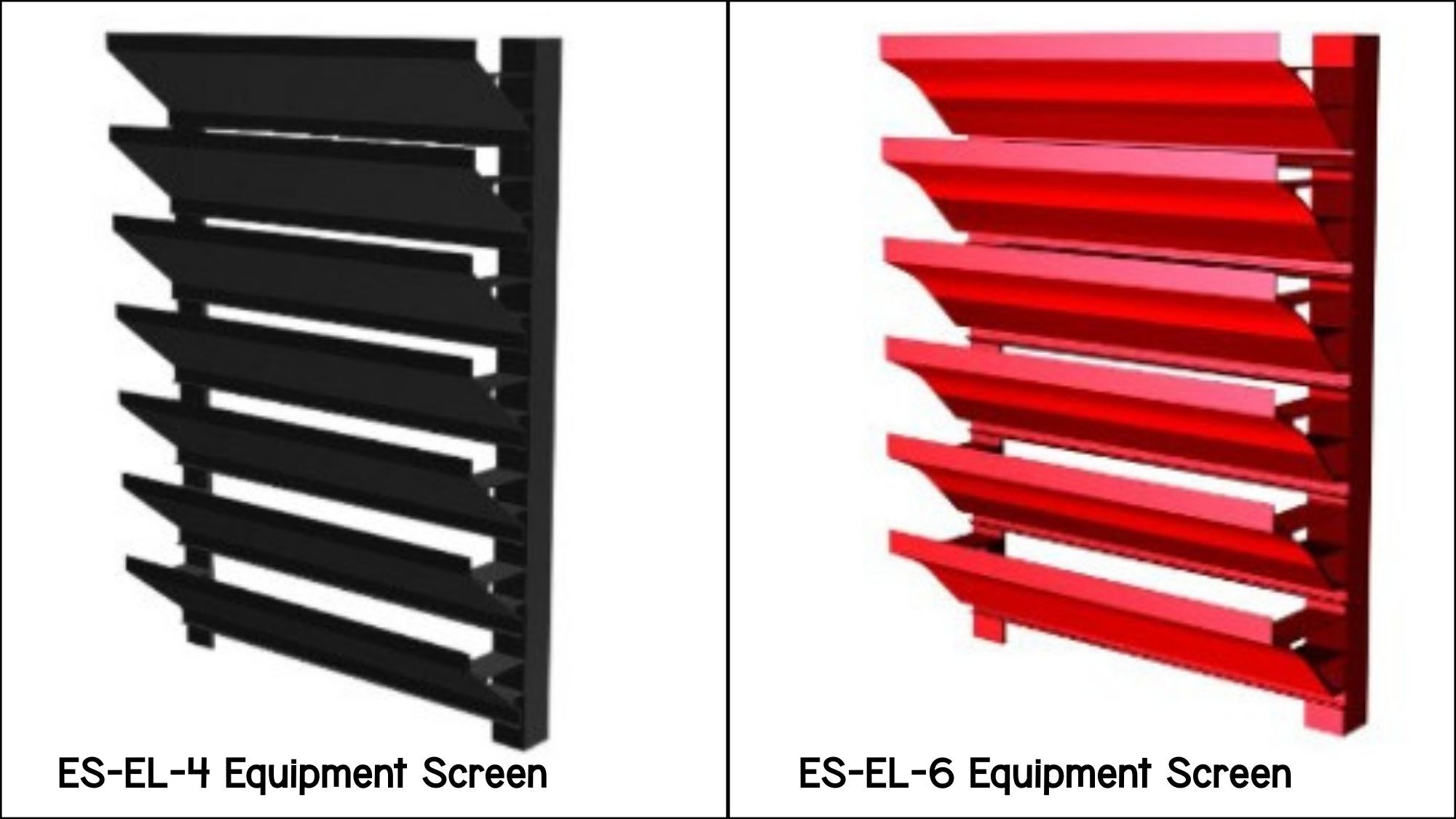
United Enertech manufactures a range of architectural screens engineered for both rooftop and ground applications, offering flexibility in depth, blade shape, and structural configuration.
ES-EL-4 Equipment Screen
The ES-EL-4 uses 4-inch-deep extruded-aluminum blades set at a 45-degree inverted angle for sight-proof concealment from most pedestrian views. The design maintains a consistent free area for ventilation while preserving clean horizontal lines across long façades. It’s ideal for rooftop mechanical screen applications where architects need uniform appearance and installers require modular assembly.
ES-EL-6 Equipment Screen
Where longer spans or higher parapets demand added rigidity, the ES-EL-6 increases blade depth to six inches. The deeper profile strengthens the panel and accentuates shadow lines, giving designers more visual depth without compromising airflow. Both systems can be factory-finished in AAMA-compliant coatings and integrated with United Enertech’s louver or damper assemblies for complete mechanical-room continuity. Whether using standard models or custom assemblies, the same specification principles apply.
Spec Tips for Architects and Engineers
When detailing architectural screens, clarity in drawings and specifications ensures consistent bids and performance.
- Define sightline height and key vantage points early.
- Confirm local zoning or design-review screening requirements.
- Coordinate with structural engineers on post spacing and attachment.
- Specify finish system (AAMA 2604 or 2605) and color standard.
- Identify access panels, doors, or removable bays.
- Maintain minimum clearances around fans or condensers for airflow.
- Consider snow-load accumulation in colder climates.
- Integrate fall-protection measures where screens surround walkways.
By documenting these items, project teams avoid conflicts between architecture, mechanical, and structural disciplines later in the build.
Achieve Code-Compliant Screening Solutions with United Enertech
United Enertech engineers design extruded-aluminum screen systems that balance airflow, concealment, and structural performance for demanding applications. Our team provides project-specific guidance on wind load, finish selection, and attachment details to help architects and engineers achieve clean, compliant designs. Contact us today for more information.