


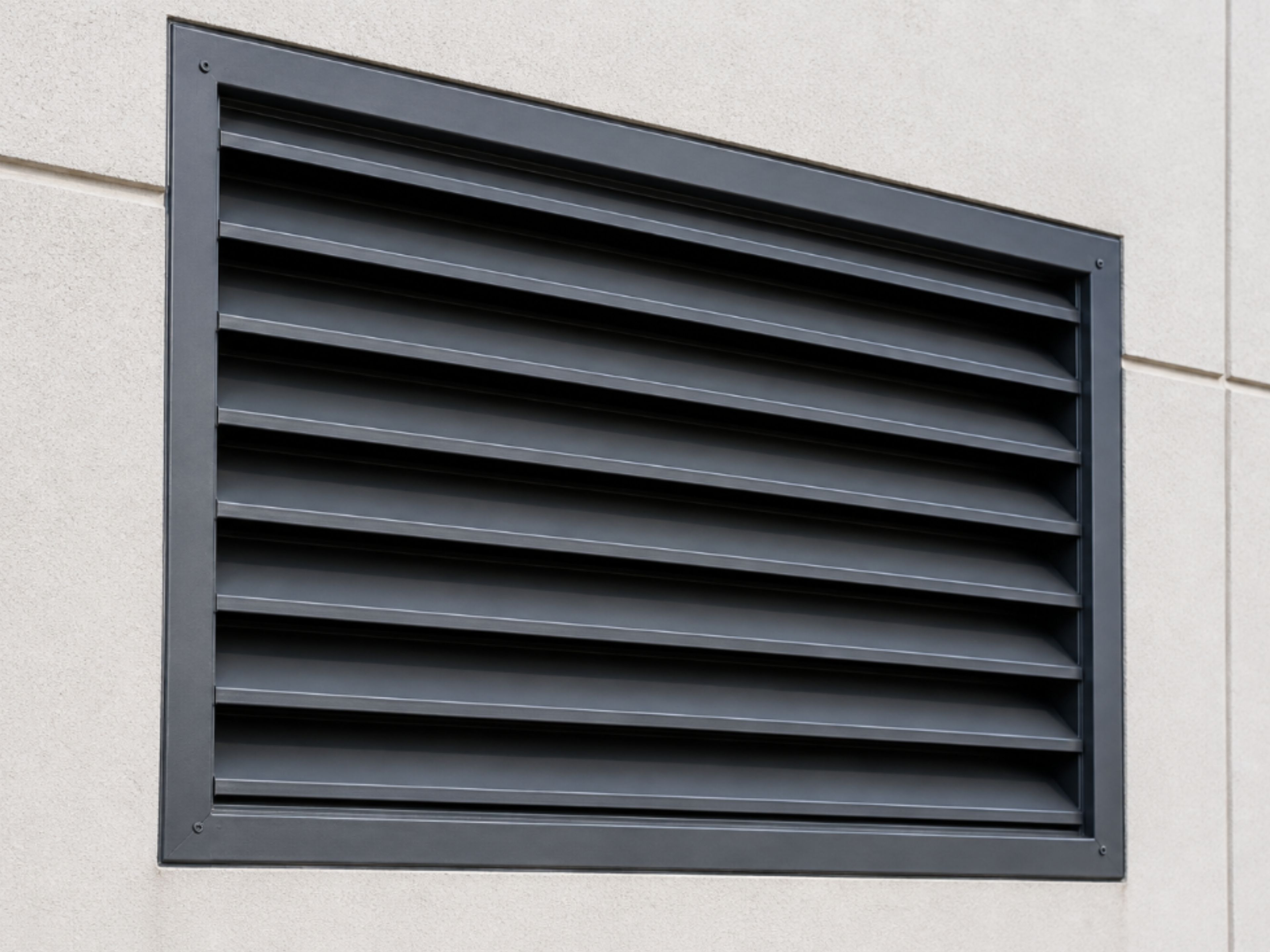
What Is a Louver? How Louvers Work, Types, and Applications
Air openings in a building must move enough air without leaving the interior exposed to rain, debris, and other unwanted elements. Louvers use different blade configurations to provide the airflow, weather protection, sound control, or specialized protection the opening requires. For anyone planning an intake, exhaust, or architectural opening, the question what is a louver? is a useful starting point.
What Is a Louver?
A louver is a framed assembly of fixed or operable blades that allows airflow while helping limit rain, debris, and other unwanted elements. This definition of louver applies to products used in exterior walls, doors, mechanical systems, equipment screens, and other building openings.
Most louvers have a rectangular frame with rows of horizontal or vertical blades, although shapes and configurations can vary. The blade profile and spacing help determine how air, water, and debris move through the opening.
What Do Louvers Do?
Louvers support ventilation by allowing outdoor air into a building or providing a path for exhaust air to leave. The purpose of louvers can also include weather protection, visual screening, airflow control, sound attenuation, or protection from severe conditions when the louver is designed for that function.
Not every louver performs all of these functions. A standard fixed louver may serve an intake or exhaust opening, whereas acoustical, hurricane, blast, or wind-driven rain models are engineered for more specialized performance requirements.
What Is a Louver Vent?
A vent is a general term for an opening or device that allows air to enter or leave a space. A louver vent is a specific type of vent that uses blades to manage the airflow path and provide additional protection or control.
In HVAC systems, louvers are commonly installed at outdoor air intakes and exhaust openings. Their design helps the mechanical system move air through the building envelope without leaving a completely open path to weather and debris.
How Do Louvers Work?
Louvers work by directing air through a series of blades, with blade shape, angle, depth, and spacing influencing how air and water move through the opening.
Blade Design and Water Management
A louver blade interrupts the straight path through an exterior opening. Blade angle changes the path air and water must follow through the opening, so different blade configurations balance airflow with weather protection in different ways. Fixed blades remain in one position, whereas adjustable blades can change position to regulate airflow.
Drainable blades collect water and direct it toward gutters or drainage paths within the louver assembly. Non-drainable blades use a simpler profile without the same internal drainage channels. The choice between them should follow the opening’s rain exposure and required water-management performance.
Free Area and Airflow
Free area is the unobstructed portion of the louver opening available for air to pass through. The gross wall opening and the actual airflow area are different because the frame and blades occupy part of the opening.
Free area is one of the key values to check when sizing a louver for a required airflow rate. United Enertech publishes free-area and pressure-drop information for applicable products so designers can compare performance at the model level.
Water Penetration and Pressure Drop
In AMCA 500-L still-air testing, the beginning point of water penetration identifies the free-area velocity at which measurable water begins passing through the louver. Blade geometry and drainage features influence how effectively a louver limits that intrusion.
Pressure drop is the resistance airflow encounters as it passes through the louver. Louvers must balance airflow requirements with the level of weather protection or specialty performance required for the application.
AMCA Testing and Certified Ratings
ANSI/AMCA Standard 500-L establishes laboratory methods for testing louvers for rating, including performance characteristics such as pressure drop and water penetration. AMCA Publication 511 governs the Certified Ratings Program requirements for air-control devices, including applicable louver ratings.
That distinction gives specifiers a consistent basis for comparing published louver performance. Certification applies to specific products and ratings, so project teams should review the published performance data for the louver being considered.
Different Types of Louvers
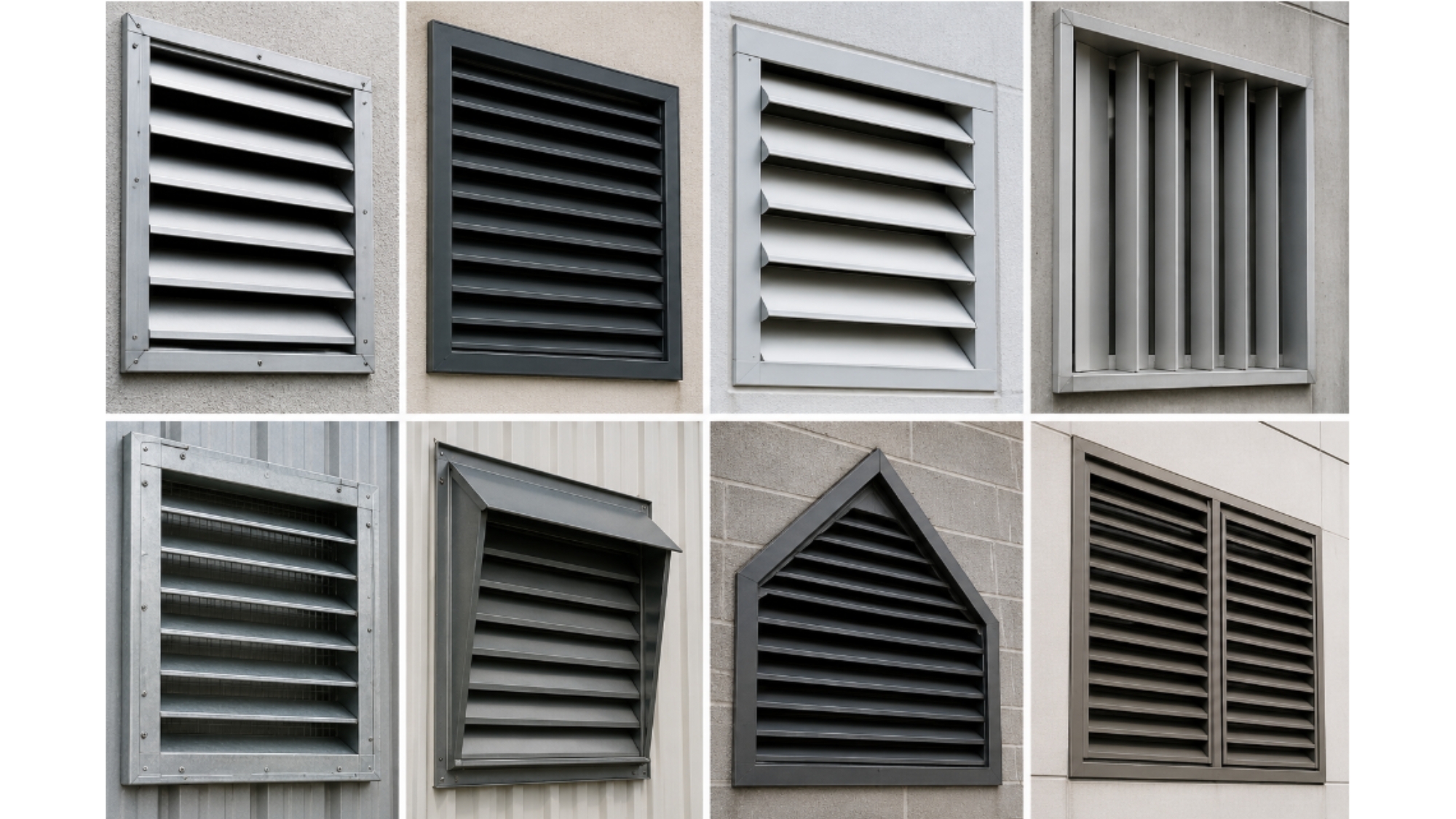
United Enertech's current louver range includes 11 categories covering ventilation and airflow control, weather and protective applications, and acoustical or architectural needs.
Ventilation and Airflow Control
Fixed louvers use stationary blades for continuous intake or exhaust ventilation. Adjustable louvers use operable blades when the air opening needs to be regulated.
Combination louver/dampers combine louver and damper functions in one assembly. Brick vents provide ventilation through building foundations, and PTAC grilles provide intake-air openings for packaged terminal air-conditioning applications.
Weather and Protective Louvers
Wind-driven rain/sand louvers are designed for openings where limiting rain or airborne sand intrusion is a primary requirement. Hurricane products, including Dade County hurricane louvers, are used where openings require protection under severe-weather conditions.
FEMA 361 louver/grilles are designed for protected openings associated with storm shelters and safe rooms. Blast louvers serve applications requiring resistance to specified blast loads.
Acoustical and Architectural Solutions
Acoustical louvers combine an airflow opening with sound-attenuating construction. They are used where mechanical or equipment noise must be reduced without closing the ventilation path.
Equipment screens conceal mechanical equipment from normal view. United Enertech also provides louvered penthouses as a separate product family for rooftop air intake or exhaust applications.
What Is a Louver Used For?
The same louver will not suit every opening because airflow, exposure, and system requirements change from one application to another. Common examples include:
- Commercial and institutional buildings: outdoor air intake, exhaust, architectural screening, and mechanical-room ventilation.
- Industrial and manufacturing facilities: intake and exhaust ventilation, large equipment openings, weather protection, and noise-control applications.
- Data centers and critical facilities: ventilation openings where airflow and environmental protection must be evaluated together.
- Power generation and infrastructure: generator rooms, equipment spaces, and applications requiring acoustical or protective louver systems.
- Storm-exposed and critical buildings: openings that require hurricane, wind-driven rain, FEMA, or other project-specific protection.
Selection should begin with airflow, opening size, weather exposure, pressure drop, and any acoustical or protective criteria specified for the project.
What Materials Are Used for Louvers?
Aluminum and steel are common louver materials because manufacturers can form them into durable frames and blade profiles for commercial and industrial applications. The appropriate material depends on louver type, structural requirements, exposure, finish, corrosion considerations, and the performance demanded by the project.
Material alone does not determine whether a louver will resist water or meet a specialty rating. Blade configuration, frame design, drainage, testing, construction, and installation all contribute to performance.
United Enertech Louver Solutions
United Enertech designs and manufactures air movement and control products for commercial, industrial, and power generation applications. Our team can help project professionals identify louver configurations that fit each opening's performance demands. Contact us today for more information.
Frequently Asked Questions
What Are Louvers For?
Louvers allow air to enter or leave a building while helping manage rain, debris, visibility, noise, or severe-weather exposure. The exact function depends on the louver's blade design and performance requirements.
What Is the Difference Between a Louver and a Vent?
A vent is any opening or device intended to allow air movement. A louver is a type of vent that uses fixed or operable blades to manage airflow while providing additional protection or control.
What Is a Louver Used For in HVAC?
In HVAC systems, a louver is commonly used at outdoor-air intakes and exhaust openings. Its blades allow air to move through the building envelope while the blade configuration helps limit weather and debris at the opening.
What Does a Louver Look Like?
A louver usually consists of a rectangular frame containing rows of horizontal or vertical blades. The blades may be fixed or adjustable, and their shape, spacing, and depth vary according to airflow and performance requirements.